
What is Public Interest?
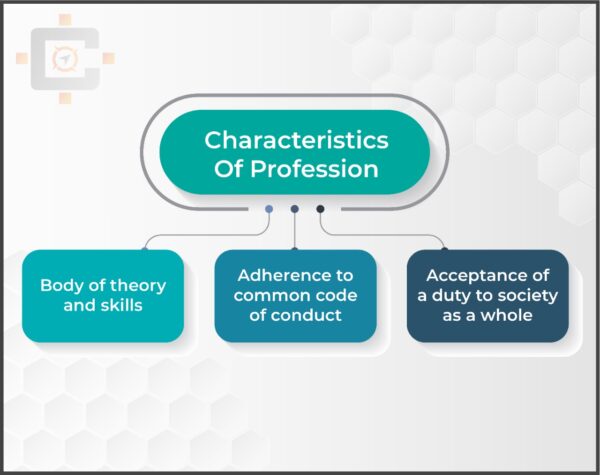
The public interest can be defined as that which supports the good of society as a whole (as opposed to what serves the interests of individual members of society or of specific sectional interest groups).
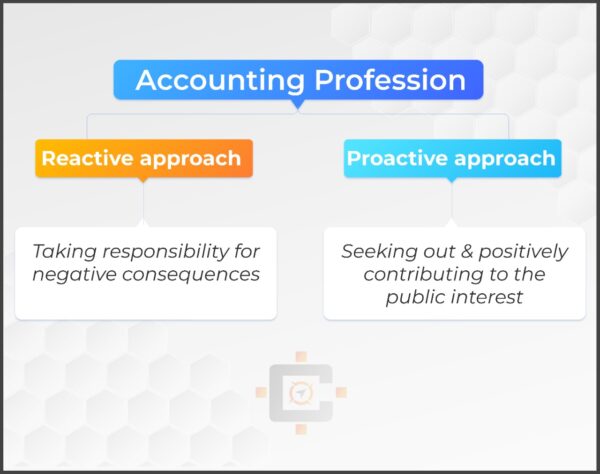
For an accountant, acting in the public interest is acting for the collective well-being of the community of people and institutions that it serves.
Accountants' role and influence
Influence on organisations:
This is largely due to the range of services that accountants can provide, including:
– financial accounting
– audit
– management accounting
– taxation advice
– consultancy
Influence in society :
- It is seen, at least by accountants, as being able to act in the public interest.
- Although the profession has the skills and knowledge to assist in the development of new initiatives. Ex: CSR, Integrated Reporting.
Influence on power and wealth distribution :
Society may have the objective of obtaining a more equal distribution of power and wealth.
Corporate Code of Ethics
A code of ethics is a guide of principles designed to help professionals conduct business honestly and with integrity. A code of ethics document may outline the mission and values of the business or organization, how professionals are supposed to approach problems, the ethical principles based on the organization’s core values, and the standards to which the professional is held.
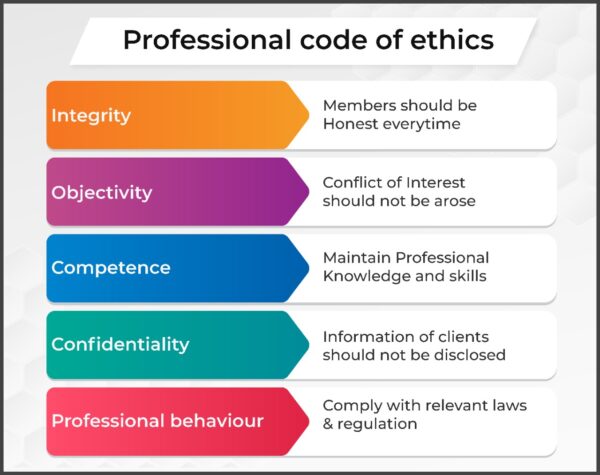
Professional code of ethics
Professional codes of ethics are issued by most professional bodies; the ACCA code was revised and reissued in 2006.
- The main reason for professional codes of ethics is to ensure that members/students observe proper standards of professional conduct
- Members and students will therefore refrain from misconduct and not make any serious departure from the ethical code.
- If the standards are not observed, then disciplinary action may be taken.
- Maintenance of a professional code of ethics helps the accountancy profession to act in the public interest by providing appropriate regulation of members.
Ethical Dilemma: Rules based and Principles based approach
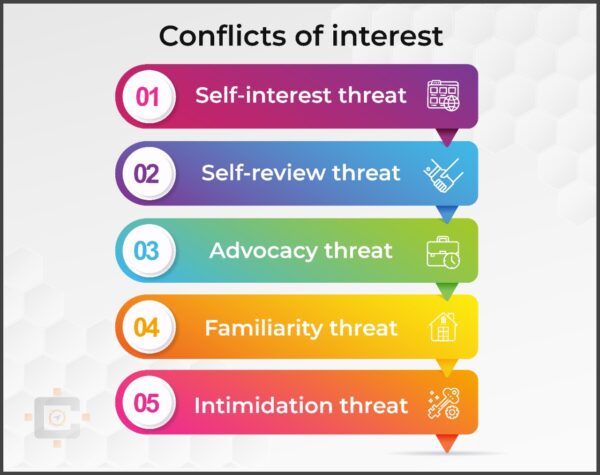
Ethical dilemma is a decision-making problem between two possible moral imperatives, neither of which is unambiguously acceptable or preferable.
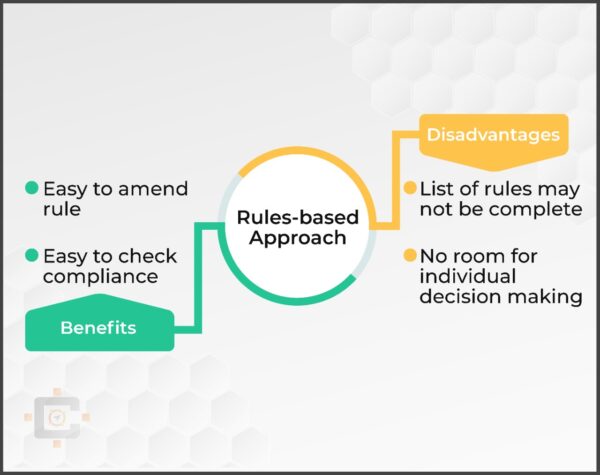
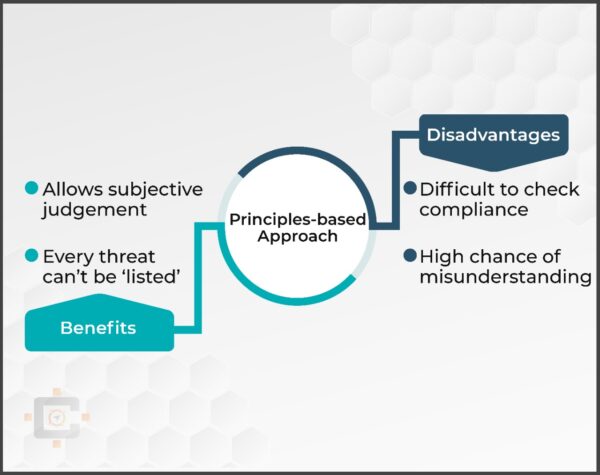
So to resolve this kind of ethical dilemma, we can use either rules based approach or principles based approach.
Most professional institutes use a principles-based approach to resolving ethical dilemmas.
Use of a rules-based approach is normally inappropriate as rules cannot cover every eventuality.
Corruption and Bribery
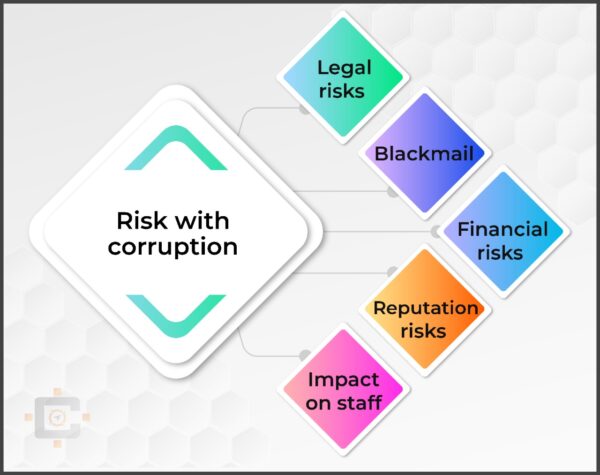
Corruption is behaviour in relation to persons entrusted with responsibilities in the public or private sector which violates their duties and is aimed at obtaining undue advantages of any kind for themselves or for others.
The main forms of corruption, embezzlement, fraud and extortion.
The UK Bribery Act (2010)
The UK Bribery Act 2010, which applies to all UK businesses, overseas businesses with some presence in the UK and UK registered businesses operating overseas, details four offences:
– Offering, promising or giving a bribe.
– Requesting, agreeing to receive or accepting a bribe.
– Bribing a foreign public official.
– A corporate offence of failing to prevent bribery.
Anti-bribery and corruption (AB&C) Procedures
As stated above, the UK Bribery Act means that many firms will now have to ensure that they have adequate procedures and controls to prevent bribery and corruption.
The UK Act sets out six principles
- Top-level commitment
- Risk assessment
- Communication
- Due Diligence
- Monitoring and review
American Accounting Association (AAA) model
The American Accounting Association model provides a framework within which an ethical decision can be made.
The seven question in the model are:
(1) What are the facts of the case?
(2) What are the ethical issues in the case?
(3) What are the norms, principles and values related to the case?
(4) What are the alternative courses of action?
(5) What is the best course of action that is consistent with the norms, principles and values identified in step 3?
(6) What are the consequences of each possible course of action?
(7) What is the decision?
Tucker’s 5-question model
Tucker provides a 5-question model against which ethical decisions can be tested. It is therefore used after the AAA model shown above to ensure that the decision reached is ‘correct’. Is the decision:
- Profitable?
- Legal?
- Fair?
- Right?
- Sustainable or environmentally sound?