
What is Leadership
Because of certain things/intelligence/experience, if you are able to see something that most people are not able to see, at that moment people will naturally look up to you as leader.
“Person who rules, guides and inspire others” – Oxford English dictionary.
“Leadership is Interpersonal influence directed towards the achievement of a goal”
“Leadership is action of leading a group of people or an organisation”
Leadership is all about inspiring people to do things, improving performance, changing the way things are done, innovate etc.
Trait Theory: (Leaders are born)
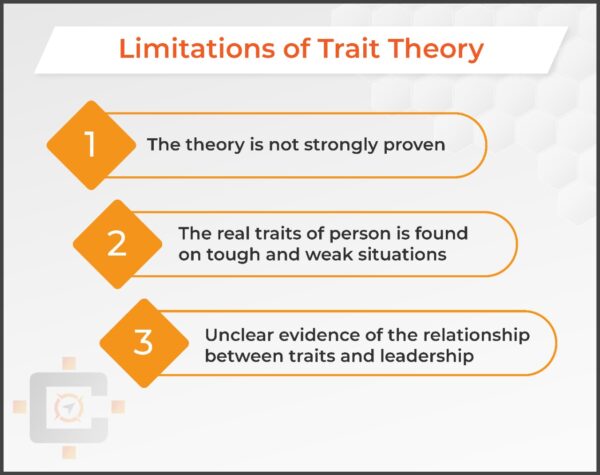
This theory focuses on trails (qualities) of person. It listed out some qualities which are required to be a good leader.
Early studies focused on the qualities required by effective leaders. Lists were compiled of required leadership qualities including:
– Physical traits, such as drive, energy, appearance and height
– Personality traits, such as adaptability, enthusiasm and self-confidence; and
– Social traits, such as co-operation, tact, courtesy and administrative ability.
Behavioural/style theories
The essence of leadership style theories is that a successful leader will exhibit a pattern of behaviour (i.e. ‘style’) in gaining the confidence of those they wish to lead. Style is a difficult factor to measure or define. The style of a manager is essentially how he or she operates, but it is a function of many different factors.
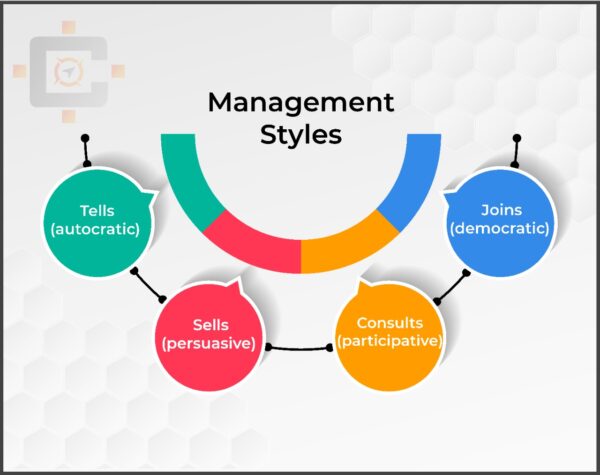
The research at Ashridge Management College distinguished four main management styles:
Tells (autocratic) – the manager makes all the decisions and issues instructions which are to be obeyed without question.
Sells (persuasive) – the manager still makes all the decisions, but believes that team members must be motivated to accept them in order to carry them out properly.
Consults (participative) – the manager confers with the team and takes their views into account, although still retains the final say.
Joins (democratic) – the leader and the team members make the decision together on the basis of consensus.
Skills of a Leader
– Inspire confidence and trust so that there is maximum co-operation from the group.
– An understanding of human nature to appreciate the attitude of the group.
– Ability to make decisions under pressure.
– Confidence both in the group and themselves.
– The ability to create a sense of direction. Leaders should have a clear idea of what they are trying to achieve with their group, department, business unit or organisation.
– The ability to think strategically.
– Entrepreneurial abilities.
– The ability to lead from the front. Leaders must be able to inspire and motivate, to translate the vision into achievement.
– The possession of good communication skills.
Transactional & Transformational leader
1) Transactional Leaders:
They see the relationship with their followers in terms of a trade: they give followers the rewards they want in exchange for service, loyalty and compliance.
2) Transformational Leaders:
They see their role as inspiring and motivating others to work at levels beyond mere compliance. Only transformational leadership is said to be able to change team/organisational cultures and move them in a new direction.
It is suggested that to cope with this type of environment, leaders need to have vision and creativity, be innovative and capable of inspiring others.