A board of directors is an elected group of individuals that represent shareholders.
The directors of the company collectively are referred to as a board of directors.
The board is a governing body that typically meets at regular intervals to set policies for corporate management and oversight. Every public company must have a board of directors.
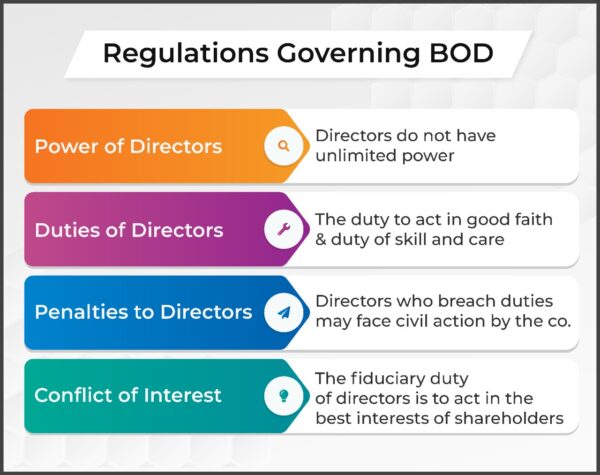
Directors, individually and collectively, as a board of directors, have a duty of corporate governance.
To improve both cognitive and demographic diversity in the boardroom, we recommend that boards recruit racially, ethnically, and gender diverse directors who enhance diversity on two additional levels: first, by adding professional backgrounds, skills, and experiences in areas that are needed to meet the company’s strategic and operating needs; and second, by introducing new views, perspectives, and approaches to problem solving.
A non-executive director is a member of a company’s board of directors who is not part of the executive team. A non-executive director typically does not engage in the day-to-day management of the organization but is involved in policymaking and planning exercises.
The board should consist of half independent NEDs excluding the chair.
One NED should be the senior independent director who is directly available to shareholders if they have concerns which cannot or should not be dealt with through the appropriate channels of chairman, CEO or finance director.
The law is there to protect the owners of the company. It exists because of the nature of a fiduciary relationship where one person acts on behalf of another.
Insider trading is the illegal purchase or sale of shares by someone (usually a director) who possesses inside information about a company’s performance and prospects which, if publicly available, might affect the share price.
These types of transactions in the company’s own shares are considered to be fraudulent.
A nomination committee is formed in order to ensure that the composition of the board is balanced. It monitors the process for appointment of directors to the board of directors as well as making recommendations for appointments to the board.
Typically, when recommending appointments, the nominations committee needs to consider the overall size of the board, as well as other factors
The role of the remuneration committee is to have an appropriate reward policy that attracts, retains and motivates directors to achieve the long term interests of shareholders.
This definition creates a good balance between the opposing viewpoints of stakeholders
To avoid the situation where the remuneration committee (consisting of NEDs) is solely responsible for determining the remuneration of the NEDs, the UK Corporate Governance Code (2016) states that the board and shareholders should determine the NED’s remuneration within the limits set out in the company’s constitution.