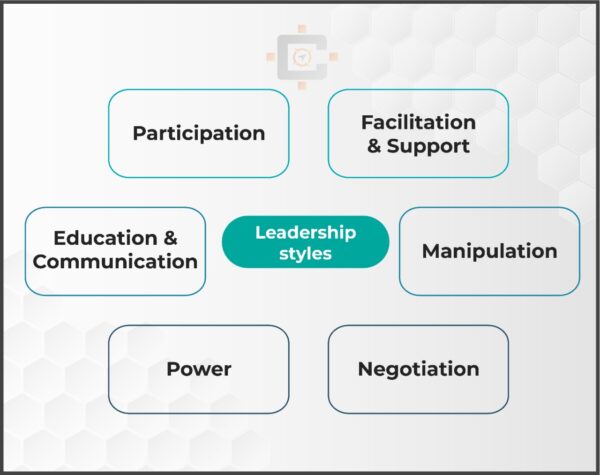
Kotter and Schlesinger believe that successful change is achieved through strong leadership. They set out the following change approaches to deal with resistance:
For change to be successful, implementation efforts need to fit the organisational context. There is no simple ‘off the shelf’ approach that will work for all organisations. Balogun and Hope Hailey suggest that there are a number of contextual features that should be considered before an implementation approach (for example a style of leadership) for the change is determined.
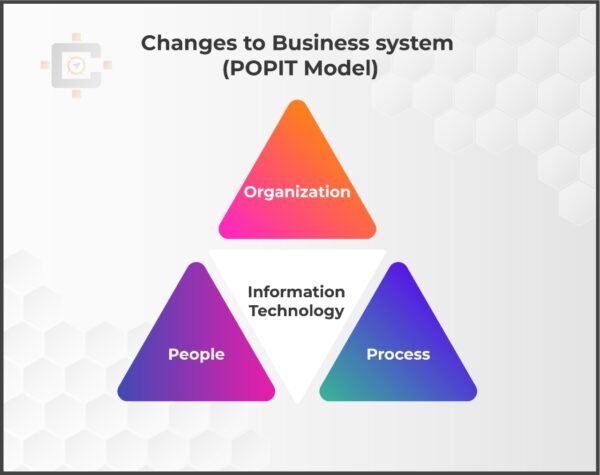
For change to be implemented successfully it needs to be co-ordinated across the entire business system. The POPIT (or four-view) model provides details of the key aspects that should be considered in managing changes within any business system:
One aspect of the POPIT model is people. There is growing evidence that people are a key determinant of organisational success. An organisation’s staff can help differentiate the organisation from rivals, can make an organisation more flexible, can help make strategic change quicker and more successful, and can ensure ongoing improvement within an organisation.
The key to making this a success is talent management.
Talent management is an organisation’s commitment to identify, recruit, engage, retain, and develop the most talented and superior employees valued by the organisation.
Key elements of talent management are that:
People are seen as a major source of competitive advantage, and their training and development are seen as an investment, not a cost
Recruiting staff based on potential and cultural fit
Learning is seen as essential and embedded in the organisation
Employees have the expectation that they will learn, change and retrain as necessary as strategy demands
The development and training of their staff is seen as a key part of a manager’s role
Changes outside the organisation are reflected in changes to training, controls and rewards
Human resource implications are considered as part of strategic planning
The sharing of information about talented employees and their potential career paths across the organisation.
Tracking the career paths of employees and managing available opportunities