
Quantitative Analysis
In the exam you may sometimes will be given raw tables and data and you have to analyse it and derive information.
That analysed information should have meaning to perform strategic analysis.
It is important that student should be able to interpret the data and use it to answer it.
1) Tables of Data:
Any kind of numerical data can be given in the form of tables and you have to interpret it and should be able to understand what the table is trying to tell you.
2) Financial Statements:
Question may also provide you financial statements and you will be required to interpret to find key messages and key issues.
To effectively analyse the financial statements you have to take care of the below four things.
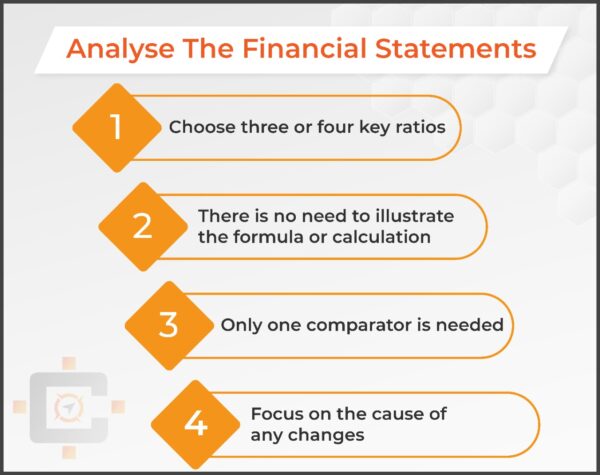
3) Non-Financial performance measures:
There will be many non-financial information given in question and will tell you something about company but you should be able to identify important non-financial information which can be linked with financial info or can have usage in strategic analysis.
To analyse the non-financial performance we have to identify our critical success factors and its KPI’s.
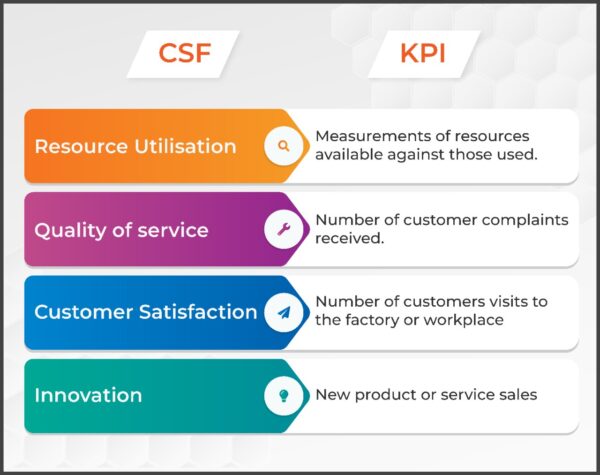
Benchmarking
Benchmarking is the process of systematic comparison of service, practice or process.
Benchmarking can be defined as,
- Identifying
- Understanding
- Adapting best practices
There are 4 types of benchmarking which described as below.
Internal benchmarking
Here we can compare our past best performance with future or current performance. Or we can benchmark our own best practices.
Competitive/Industry benchmarking
Here we compare our performance or process with any of our competitor.
Activity benchmarking
Here we can compare our process with any other company who may or may not be our competitor (it can be from different industry also).
Generic benchmarking
Sometimes, we can be the only one who performs any process or we are first one in that business (Like – Hyperloop by Elon Musk). So we may not find perfect match for comparison then in that case conceptually similar process is sought as a benchmark (Like Coal Extraction Company).

Baldridge Performance Excellence
Baldridge developed criteria for performance excellence in the belief that organisations that incorporate them into their organisational practices can expect to achieve performance superior to their competitors.
- Leadership
- Strategy
- Customers
- Workforce
- Operations
- Results
- Measurement, analysis and knowledge management